📞 24/7 free expert line: +90 216 888 15 46 — we're with you within seconds of an accident
May 29, 2026
The First 5 Things to Do After a Traffic Accident
The minutes right after a collision are stressful, and stress makes it easy to forget the basics. Your heart races, your hands shake, and clear thinking is exactly what slips away. That is precisely why knowing what to do in advance is so valuable: a sequence you have rehearsed in your head becomes something you can fall back on when panic sets in.
This guide covers the first five things to do after a material-damage (no-injury) traffic accident, in order. Treat them like a checklist and you will stay composed even in a chaotic moment.
1. Make sure everyone is safe
Your first priority is people, not paperwork. Check yourself and your passengers, then the people in the other vehicle. If anyone is injured, do not move them unnecessarily and call 112 immediately. Injury accidents are not handled with a self-completed report — emergency services and the traffic authorities must be involved.
If it is only material damage and the scene is dangerous (a fast lane, a blind curve, a tunnel, a motorway), move the vehicles to a safe spot only after you have photographed their original positions. Then, in order:
Turn on your hazard lights.
Put on a reflective vest, especially at night or in fog.
Place the warning triangle behind your vehicle at a visible distance (about 30 m in town, further on high-speed roads).
Move passengers off the road, behind the barrier, away from traffic.
2. Document the scene before anything moves
Evidence disappears the moment cars are moved or the road is cleared. Take photos and short videos before repositioning anything, capturing:
The position of both vehicles relative to the road and each other
All visible damage on every vehicle, close up and wide
License plates, traffic signs, lane markings and traffic lights
Skid marks, debris and any road conditions (ice, oil, potholes)
The wider scene, so the location is identifiable
More documentation is always better than less. Tip: keep your phone’s geotagged photo feature on so the accident’s coordinates are recorded, and walk a quick 360-degree video of the whole scene. These images become the backbone of the technical assessment later.
3. Exchange information calmly
Get the other driver’s name, phone number, plate number, vehicle make/model, and mandatory traffic insurance policy details. Stay polite and avoid arguments about who is responsible — that is not something to settle on the roadside. Avoid saying things like “it was my fault,” even out of goodwill; such statements can be read against you later. The incident needs technical assessment, and trying to negotiate it under stress rarely helps.
If the other driver refuses to share details or to sign, do not panic — the process can still proceed using the plate number. This is exactly where an adjuster report proves its worth, because the file is supported by an impartial technical opinion rather than only by party statements.
4. Call for an expert report
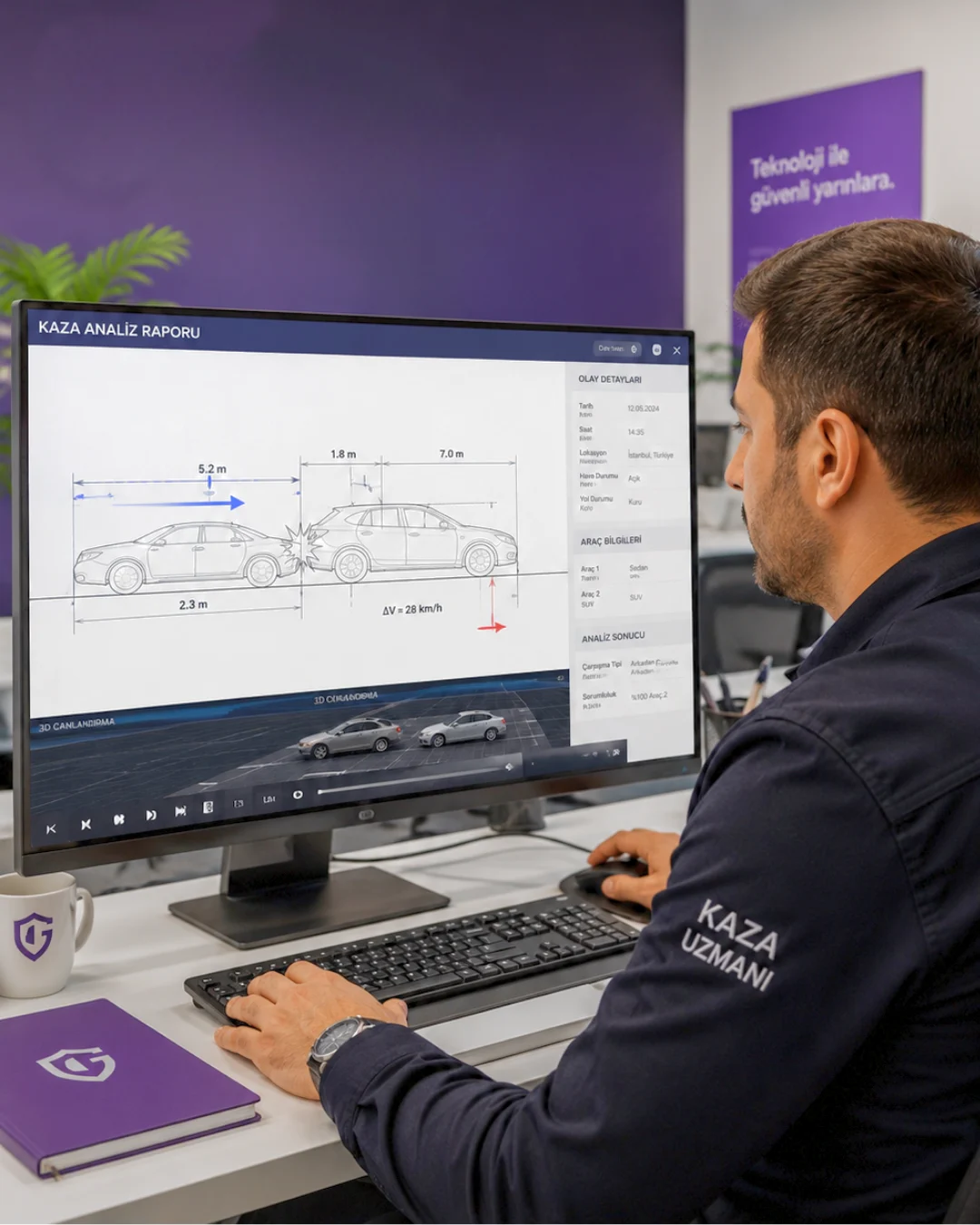
This is the step most people get wrong. Instead of relying only on a simple form (such as the drivers’ self-completed SBM mobile report), you can have a material-damage traffic accident report drawn up by an authorised registered insurance adjuster under Law 5684, article 22/17. Unlike the simple mutual report that drivers fill out themselves, this report may include the adjuster’s technical opinion and a scene sketch.
With Alo Tutanak — serving drivers since 2017 — you call our 7/24 line, calls are answered in about 45 seconds, our experts guide you on the phone, and a licensed adjuster prepares the report. The app, call line and guidance are free; the adjuster fee process is handled under Law 5684 art. 22/19 and the relevant insurance contract terms. The service covers all 81 provinces, and the whole process can be handled remotely. You can read more on our what to do at the accident page and about the adjuster-approved accident report.
5. Notify your insurer and keep your records
Once the report is secured, notify your insurance company and open your claim file (we cover that in a separate guide). Keep every photo, the report, and your notes together. A complete, well-documented file moves through the claims process far faster than a thin one.
Mistakes to avoid in the first minutes
Knowing what not to do matters as much as the steps themselves:
Driving off before documenting. Once cars move and the scene clears, the evidence is gone for good.
Admitting fault verbally. Statements like “it was my fault,” even said to be polite, can be used against you later.
Settling for one wide photo. Take many shots, both wide and close-up, of every vehicle and angle.
Skipping the other party’s insurance details. Without the plate and policy info, your claim slows down.
Underestimating an injury. At the slightest doubt, call 112 — health always comes first.
Avoiding these directly protects the strength of the claim file you will open later.
A few special situations
Parked-car hit while you were away. Photograph the damage and surroundings, look for witnesses or cameras, and note any details left behind. The plate of the other vehicle (if present) lets the process proceed.
The other driver flees (hit and run). Note the plate, call 112, and document everything. Do not chase.
Bad weather or night. Prioritise visibility and your own safety — vest, hazards, triangle — before you start photographing.
A shared-fault collision. Do not try to apportion blame yourself; let the adjuster’s technical assessment support the file.
Keep an emergency routine in mind
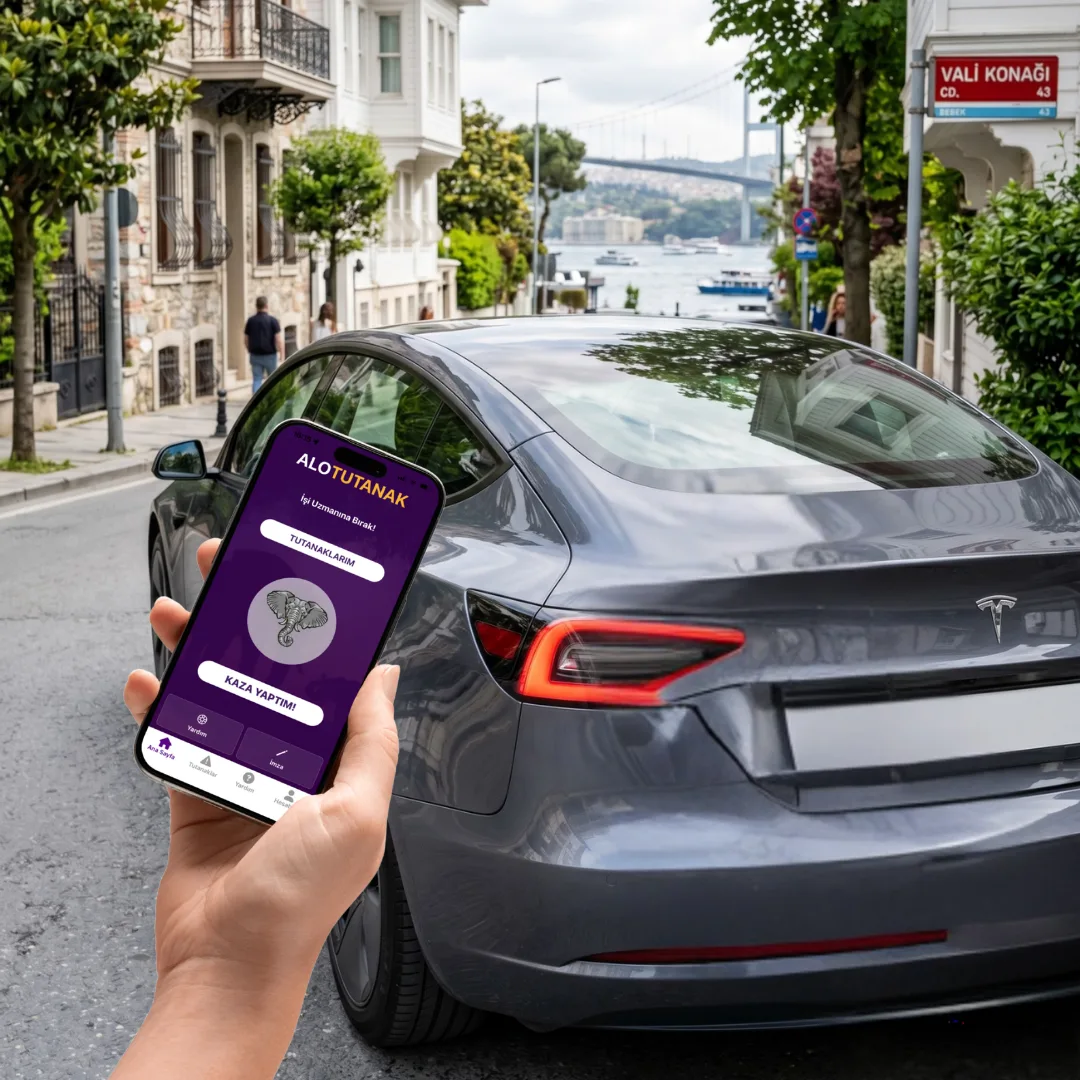
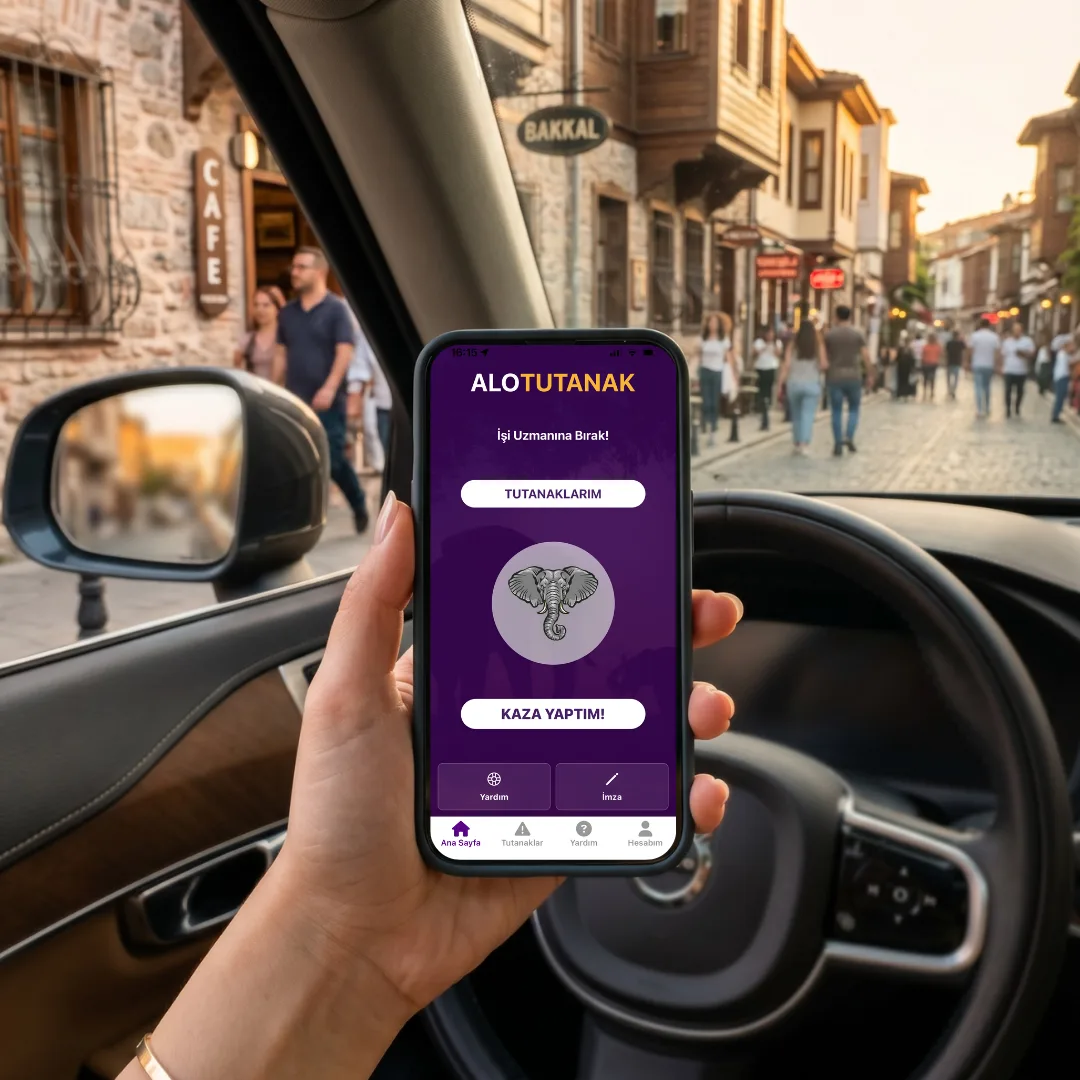
The calmer you are, the better your decisions. A simple way to stay composed is to keep a short mental routine: safety, document, exchange, expert report, notify. If you have the Alo Tutanak app installed in advance, steps two through five become a guided flow rather than a scramble — the app structures your documentation and connects you to expert support, so you are never improvising at the worst possible moment.
Frequently asked questions
Do I have to call the police if no one is injured?
No. For a straightforward material-damage accident with no special circumstances (alcohol, no insurance, damage to public property), you can document it without the police.
Do I lose my rights if the other driver won’t sign?
No. The process can proceed using the plate number. With an adjuster report, the file is supported by an impartial technical opinion rather than only by signatures.
Will I pay for the expert report?
The app, call line and guidance are free. The adjuster fee process is handled under Law 5684 art. 22/19 and the relevant insurance contract terms.
How many photos should I take?
There is no such thing as too many. Always capture the vehicles’ positions, all damage, plates, and the surroundings.
A quick checklist
People first — injuries or safety risks mean 112.
Photograph and film the scene before moving anything.
Exchange details (and insurance) without arguing about fault.
Get an expert report from a licensed adjuster.
Notify your insurer and keep all records.
Accidents are unpredictable, but your response does not have to be. Knowing these five steps in advance turns a chaotic moment into a manageable one. When you are ready, download the Alo Tutanak app so the right help is one tap away the next time the road surprises you.
When an accident happens, you do not want to read a manual — you want help, fast, and a result you can trust. That is what Alo Tutanak is built for. Here is exactly how it works, f
After a material-damage accident, two very different documents are often confused with each other: the mutual report that drivers fill out themselves, and the report prepared b
Right after a collision, one of the first questions is: do I need to call emergency services? In Türkiye, emergency health, police, gendarmerie, fire and disaster response are rout
Don't wait — install it today.
Setting up the app before you ever need it is what saves you when seconds count.