📞 24/7 free expert line: +90 216 888 15 46 — we're with you within seconds of an accident
May 29, 2026
What Happens If the Other Driver Won't Accept the Report?
You have had an accident, you know it was not your fault — and the other driver disagrees, refuses to sign, or simply will not cooperate. It is a frustrating and common situation. The good news is that a refusal on their part does not have to derail your claim, especially if you handle the evidence correctly. Here is what to do.
Stay calm and do not argue fault on the roadside
The incident needs technical assessment, not a roadside debate. Arguing rarely changes the other driver’s mind and can escalate into a dispute. Keep your composure, stay safe, and focus on one thing: securing solid, independent evidence.
The problem with a self-completed mutual report
If you were relying on the simple mutual report that drivers fill out themselves, an uncooperative driver creates a real problem. That form depends on both parties agreeing and signing. If the other driver refuses to sign, disputes your version, or fills in a contradictory account, the form can end up with fault undetermined — and your claim slows down or gets contested.
This is precisely the scenario where the self-completed form shows its limits. It captures what drivers say, and when they disagree, it captures a disagreement.
Why a licensed-adjuster report changes the picture
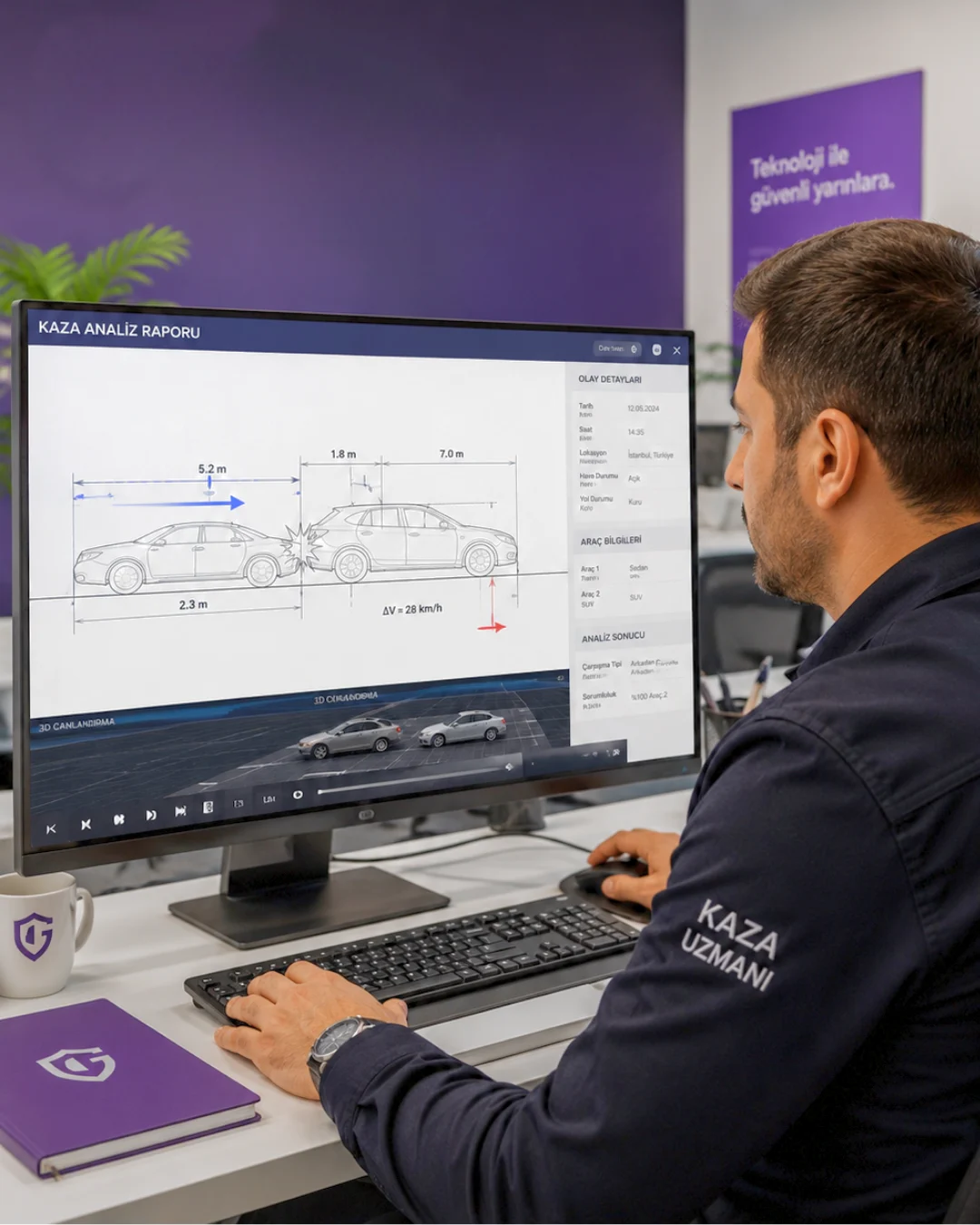
The stronger path is a material-damage traffic accident report prepared by an authorised registered insurance adjuster under Law 5684, article 22/17. Unlike the simple mutual report drivers complete themselves, this report is supported by impartial technical assessment. A licensed adjuster:
Examines the scene and the damage
Documents the evidence professionally
Provides a technical opinion and a scene sketch
Because the technical opinion comes from a qualified and impartial expert rather than from the drivers negotiating between themselves, an uncooperative or disagreeing other driver is not the only basis for the file. The report stands on the adjuster’s professional findings.
Why your own evidence is the real safeguard
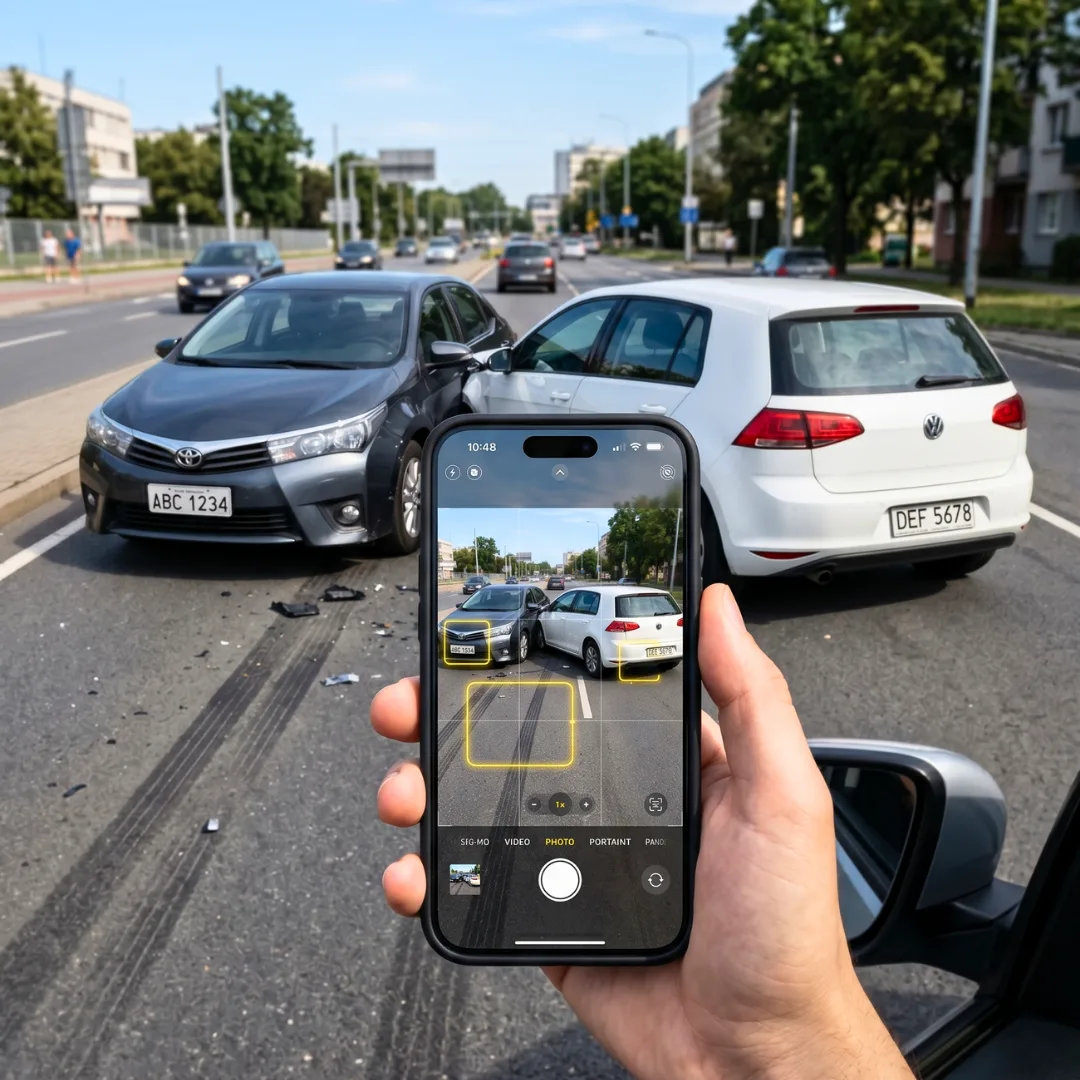
When the other driver won’t cooperate, the single most powerful thing in your control is the evidence you capture. Independent, well-documented evidence does not depend on anyone’s signature or goodwill — it speaks for itself. Focus on:
Wide shots showing both vehicles’ positions relative to the road and each other.
Close-ups of every point of damage on both vehicles.
The plate of the other vehicle (the process can run on the plate alone).
Road context — signs, traffic lights, lane markings, and conditions like ice or oil.
Witnesses or cameras — note contact details and look for nearby dashcams or CCTV.
A short video walking the whole scene, which conveys the spatial relationship better than stills.
Keep your phone’s geotagging on so the coordinates are recorded. The more complete this set, the less an uncooperative driver can do to weaken your position.
What to do at the scene if the other driver won’t cooperate
Stay safe and avoid confrontation. Do not let it escalate.
Document everything yourself — photos and videos of both vehicles’ positions, all damage, plates, road conditions, and the wider scene.
Note their details — plate number, vehicle, and anything you can about their insurance, even if they will not share much.
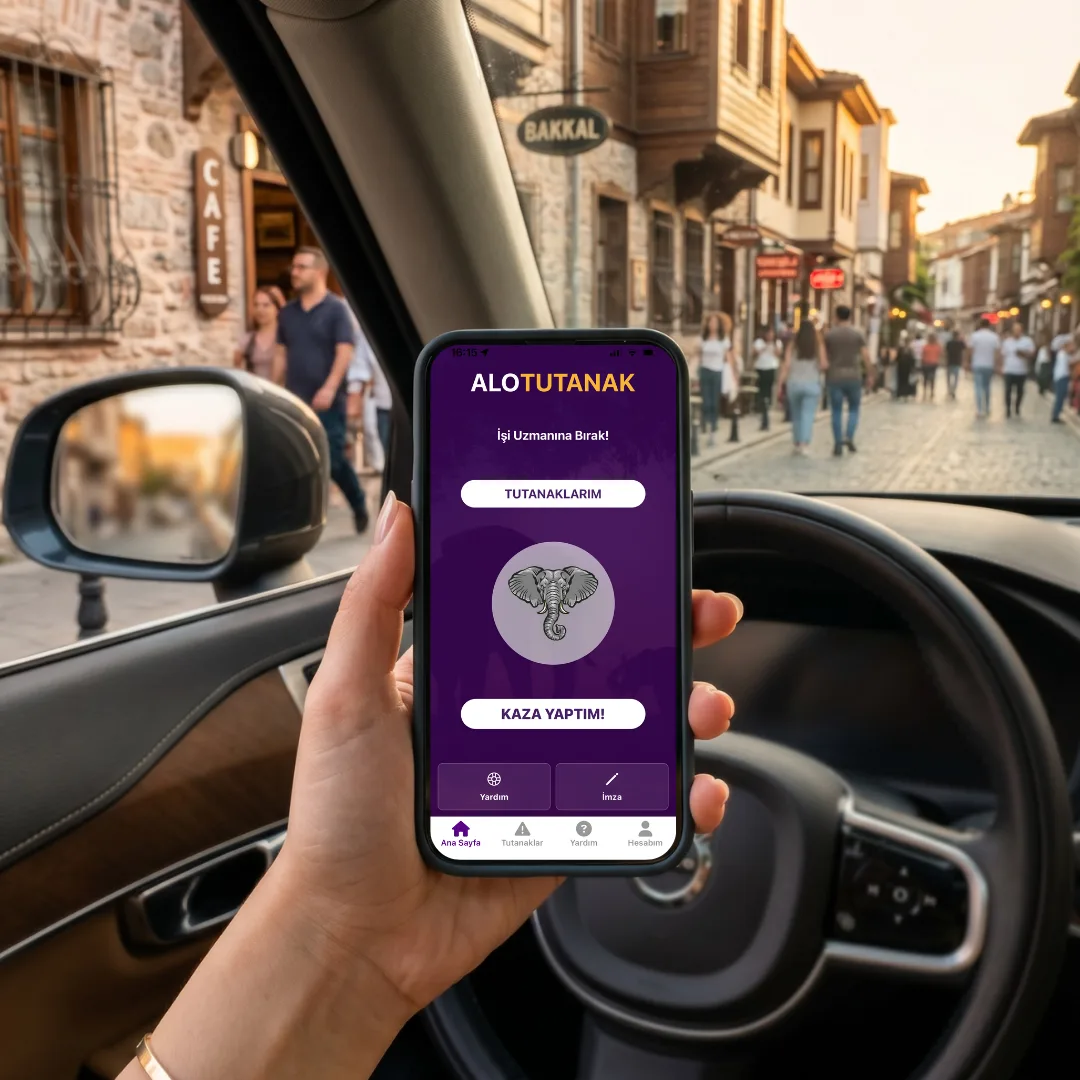
Call for a licensed adjuster through Alo Tutanak’s 7/24 line. Our experts guide you, and the adjuster prepares a report based on the evidence.
If the situation turns hostile or there is a serious dispute, call 112. Any injury, threat, hit-and-run or safety risk should go through the emergency call centre.
A quick side-by-side
Situation
Self-completed mutual report
Licensed-adjuster report
Other driver won’t sign
Process stalls
Proceeds (via plate number)
Fault is disputed
May stay unresolved
Supported by expert opinion
Risk of a false account
High
Physical evidence prevails
Support in arbitration / court
Limited
Evidential report
Common reasons drivers refuse — and why it doesn’t stop you
People deny fault for all sorts of reasons: genuine misunderstanding of the rules, fear of a higher premium, or simply hoping to avoid responsibility. None of these change the physics of the collision. An adjuster reads the damage marks, the impact angle, and the scene layout, and forms a reasoned, independent opinion. So even a confident denial carries little weight when it contradicts the evidence. Your job at the scene is not to win the argument — it is to make sure the evidence is captured cleanly so the expert can do the rest.
Protecting your claim afterward
With an adjuster’s report and your own documentation, your insurance file is supported by independent, professional evidence rather than only by the other driver’s goodwill. If a dispute over the claim arises later — at the Insurance Arbitration Commission or in court — a well-documented file with an expert technical assessment can support your case.
How Alo Tutanak helps
When the other side will not cooperate, an impartial technical assessment can support your file. With Alo Tutanak — serving drivers since 2017, with calls answered in about 45 seconds — the app, call line and guidance are free. The adjuster fee process is handled under Law 5684 art. 22/19 and the relevant insurance contract terms. It covers all 81 provinces, can be handled remotely, and the report has evidential value under Law 5684 art. 22/17.
If the other driver won’t sign, is the report useless?
An adjuster report can support the file with an impartial technical opinion; if a signature is refused, the process proceeds according to the concrete circumstances.
What if the other driver gives a false account?
The adjuster assesses the accident dynamics and damage technically; a false account loses weight when it contradicts the physical evidence.
The other driver fled the scene — what do I do?
Note the plate, call 112, and gather your evidence. The process can proceed using the plate number.
What if the dispute is never resolved?
You can apply to the Insurance Arbitration Commission or pursue legal remedies. In both, the adjuster report can support your file as evidence.
Bottom line
An uncooperative other driver is a headache, but it is not the end of your claim. Do not argue fault on the roadside; document everything, and get a licensed-adjuster report so the file is supported by professional findings, not only by the other driver’s signature. Download the Alo Tutanak app and be ready for the moment cooperation breaks down.
When an accident happens, you do not want to read a manual — you want help, fast, and a result you can trust. That is what Alo Tutanak is built for. Here is exactly how it works, f
After a material-damage accident, two very different documents are often confused with each other: the mutual report that drivers fill out themselves, and the report prepared b
Right after a collision, one of the first questions is: do I need to call emergency services? In Türkiye, emergency health, police, gendarmerie, fire and disaster response are rout
Don't wait — install it today.
Setting up the app before you ever need it is what saves you when seconds count.