📞 24/7 free expert line: +90 216 888 15 46 — we're with you within seconds of an accident
May 29, 2026
Mutual Report vs Licensed-Adjuster Report: The Difference
After a material-damage accident, two very different documents are often confused with each other: the mutual report that drivers fill out themselves, and the report prepared by a licensed insurance adjuster. They are not the same thing, and the difference can affect how clearly your insurance claim file is documented. Let us clear it up.
The simple mutual report
The mutual report (the form drivers complete between themselves, including SBM’s mobile app version) is the lightweight option. The two drivers describe the accident, sketch what happened, confirm it, and submit it to their insurers. It is quick and requires no third party.
But that simplicity is also its weakness:
It relies entirely on the drivers’ own account, which can be incomplete or contradictory.
It carries no professional opinion — no expert is assessing the scene.
If the drivers disagree on fault, the form often cannot resolve it.
Mistakes, missing fields, or an unclear sketch can leave the fault undetermined, slowing or complicating the claim.
If one driver later changes their account or refuses to confirm, the process can stall.
For a tiny, undisputed bump it can be enough. For anything with real damage or any disagreement, it leaves too much to chance. In short, it records what drivers say happened — and when they disagree, all it records is a disagreement.
The licensed-adjuster report
The adjuster route is a material-damage traffic accident report drawn up by an authorised registered insurance adjuster under Law 5684, article 22/17. This is not the same as the simple mutual report; under the law, the report has evidential value in the insurance process.
What makes it different:
A licensed, authorised adjuster examines the accident.
The report includes the adjuster’s professional technical opinion — not just the drivers’ say-so.
It contains a proper scene sketch and structured documentation.
Because the file has an independent technical assessment, insurers can process the claim with less back-and-forth.
In short: the mutual report is what drivers say happened; the adjuster report adds what a qualified expert assesses from the findings. That distinction is exactly what insurers rely on.
Side-by-side
Mutual report (self-completed)
Licensed-adjuster report
Who prepares it
The drivers
An authorised registered insurance adjuster
Legal basis
Self-completed form
Law 5684, art. 22/17
Technical assessment
Drivers’ own claim
Professional expert opinion
Scene sketch
Hand-drawn by drivers
Prepared as part of the report
Strength for a claim
Limited
Strong
Why this matters for your claim
When an insurer reviews a thin, self-completed form with an unclear sketch and disputed statements, the claim can stall, get questioned, or require additional evidence. When the file contains an adjuster’s report with a clear technical opinion, there is stronger evidence to review. The cleaner the evidence, the smoother the process.
Why the sketch and technical opinion matter
In an insurance claim, technical findings shape how the file is reviewed. That is why two elements of the report are so important:
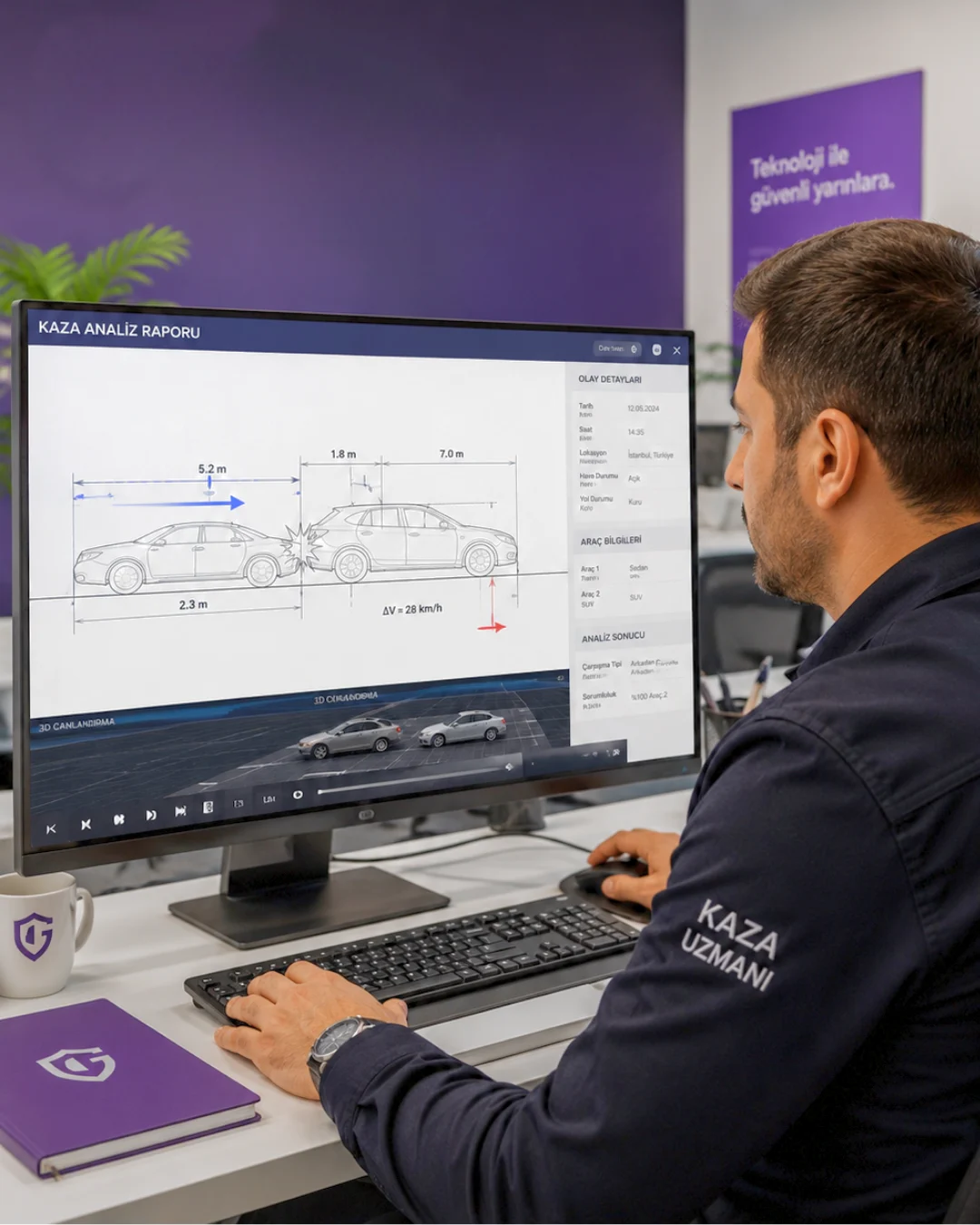
The scene sketch. It visually establishes where the vehicles were, the point of impact, and the road layout. An adjuster’s professional sketch is far more explanatory than a hand-drawn diagram by stressed drivers.
The technical opinion. The adjuster examines the damage marks, the angle of impact, and the dynamics of the collision to reach a reasoned technical assessment.
Together, these two elements help answer the insurer’s central questions. A self-completed mutual report often leaves those questions open.
The practical difference in the process
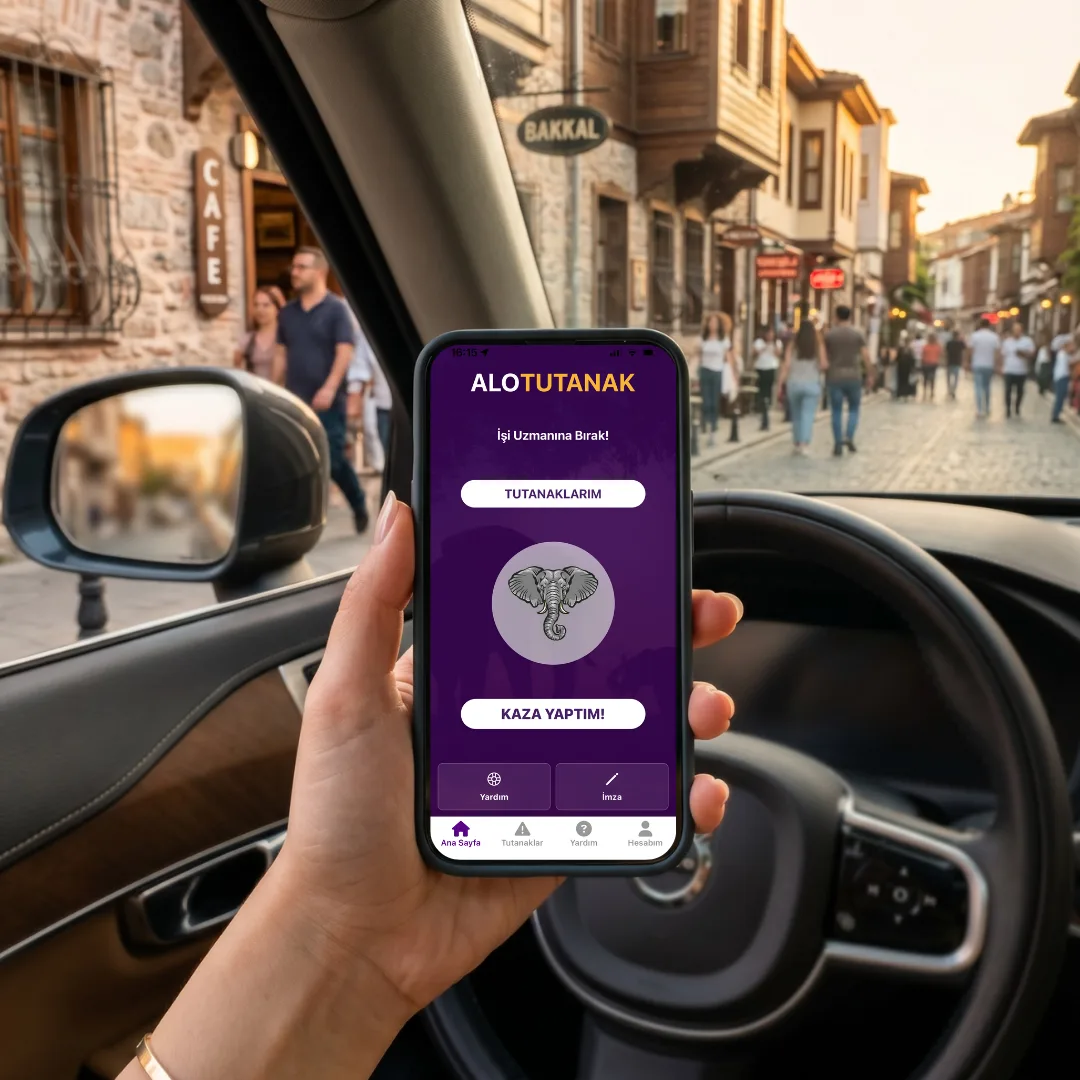
With a mutual report, the two drivers complete the form together, agree, and confirm it; if one refuses, the process stalls. With an adjuster report, an independent expert is involved, so you are not dependent on the other party’s cooperation. And with Alo Tutanak, the whole thing is guided over the phone and documented through the app — you are not left alone at the scene trying to fill out the right form correctly under pressure.
When is each enough?
Tiny, undisputed scrapes: where both drivers agree and the damage is minor and visible, a mutual report can be practical.
Real damage or disputed fault: beyond a bumper scratch, or when fault is unclear or denied, the adjuster report is the safe path.
No cooperation from the other party: if they refuse to sign or share details, the adjuster report keeps moving because it does not require their agreement.
App and call support are free
Many people assume app and call support costs more. It does not. With Alo Tutanak — serving drivers since 2017 — the app, call line and guidance are free. The adjuster fee process is handled under Law 5684 art. 22/19 and the relevant insurance contract terms. You call our 7/24 line, calls are answered in about 45 seconds, our experts guide you, and a licensed adjuster prepares the report. It works across all 81 provinces and can be handled remotely.
Is the adjuster report really free?
The app, call line and guidance are free. The adjuster fee process is handled under Law 5684 art. 22/19 and the relevant insurance contract terms.
The other driver disputes fault — which document helps me?
The adjuster report. Because fault rests on an independent expert opinion rather than on the drivers’ say-so, it is not derailed by the other driver’s objection.
Can the adjuster report be used in the insurance process?
Under Law 5684 art. 22/17, an authorised adjuster report has the effect of an accident and damage determination report for insurance indemnity payment and has evidential value.
I already filled out a mutual form. Can I still get an adjuster report?
Depending on the circumstances, the adjuster report is the stronger document. If in doubt, call Alo Tutanak and ask.
Bottom line
A self-completed mutual report may be enough for the smallest, friendliest fender-bender. For anything more complex or disputed, a licensed-adjuster report can support your claim file with technical evidence. Download the Alo Tutanak app and have the guided option ready before you ever need it.
When an accident happens, you do not want to read a manual — you want help, fast, and a result you can trust. That is what Alo Tutanak is built for. Here is exactly how it works, f
After a material-damage accident, two very different documents are often confused with each other: the mutual report that drivers fill out themselves, and the report prepared b
Right after a collision, one of the first questions is: do I need to call emergency services? In Türkiye, emergency health, police, gendarmerie, fire and disaster response are rout
Don't wait — install it today.
Setting up the app before you ever need it is what saves you when seconds count.