📞 24/7 free expert line: +90 216 888 15 46 — we're with you within seconds of an accident
Problem solving
Hitting a Parked Car
If your parked car was hit, or you hit a parked vehicle, fault is usually on the hitting driver. Secure your rights with proper documentation and an adjuster report.
When a parked car is hit, fault is usually on the hitting driver
When a vehicle parked in line with the rules is hit, fault is, as a rule, on the hitting driver. Highway Traffic Code (KTK) art. 84 treats hitting a vehicle that has stopped in accordance with parking rules as an important criterion in independent adjuster assessment. However, the exact share of fault can change depending on whether the parked vehicle was standing within the rules (no-parking zone, blocking visibility, etc.); that is why, for a definitive technical opinion, an independent expert’s opinion is decisive.
Hitting a parked car comes up both when your car is hit while parked and when you hit a parked vehicle while manoeuvring. In either case, documenting the scene correctly and securing the process with an adjuster report matters greatly — even when fault looks clear, you still need to put your file on solid ground.
~45 sn
Çağrı yanıt süresi
7/24
Uzman hattı
81 il
Türkiye geneli
4.7/5
145 değerlendirme
Three different scenarios
Hitting a parked car arises in three basic situations. The step you take depends on which one you’re in:
Your car was hit while parked
If the hitting driver is present, take their details and start the adjuster process. Fault is usually on the hitting party.
You hit a parked car
Don't leave the scene. If the other driver is absent, leave your contact details in a visible spot and call our line.
The hitting driver fled
If the plate is unknown, document the damage, cameras and witnesses and call 112; this is a hit-and-run.
Step by step: after hitting / being hit while parked
1
Secure safety
If traffic is affected, turn on hazards and place a warning triangle; move the vehicle to a safe spot if needed.
2
Document the scene
Photograph and film the damage, plates, parking position and surroundings from different angles without moving the vehicles.
3
Get the other party's details
If the hitting driver is present, record name, plate, registration, license and traffic insurance policy details.
4
If the driver fled, call 112
If the hitting driver is gone, document the damage, note nearby cameras and witnesses, and call 112.
5
Open Alo Tutanak / call
Start the record in the mobile app or call the free 24/7 line; an expert will guide you.
6
The adjuster draws up the report
If both parties are present, the authorised registered adjuster prepares the report with a technical opinion and sketch.
What to do if the hitting driver fled (plate unknown)
Dealing with a driver who hit your parked car and fled is frustrating, but there are things you can do. First, photograph the damage and your car’s parking position from different angles. Identify and note nearby security cameras (shops, residential complexes, municipal cameras) and any witnesses; if possible, take their contact details. If you remember even part of the plate, record it.
If the plate is unknown or the driver can’t be reached, the other party’s participation may not be secured for the adjuster report; in that case, call 112 for a hit-and-run. Then call our 24/7 line to learn how to proceed with the claim — our expert guides you through special situations such as an uninsured or fleeing driver.
If you hit a parked car
Here the most critical rule is: don’t leave the scene. Document the damage and the vehicles’ positions. If the other car’s owner isn’t there, leave your reachable contact details in a visible spot (on the windscreen) and call our 24/7 line to start the process. Leaving the scene counts as a hit-and-run and can carry legal consequences.
The advantage of the adjuster report
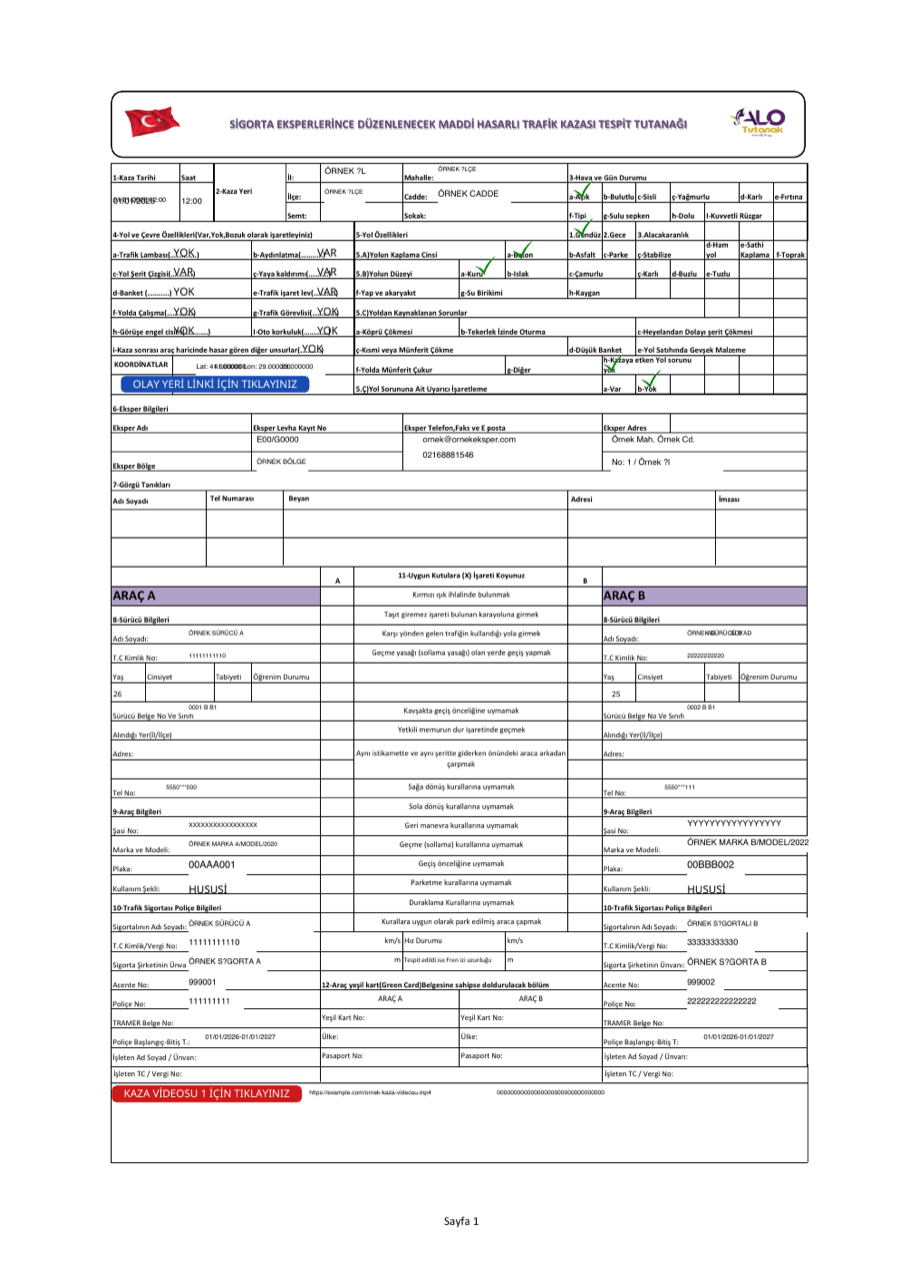
If the other driver is at the scene and takes part, then unlike the simple mutual report drivers fill in themselves, an authorised registered insurance adjuster draws up the report including a technical opinion and sketch under Law 5684 art. 22/17. In incidents such as hitting a parked car, the adjuster’s opinion can support the file, especially when parking rules are in dispute.
Is the hitting party always at fault?
The general rule is that the hitting party is at fault, but there are exceptions. If the parked vehicle was standing against the rules — for example on a pedestrian crossing, in front of a fire hydrant, double-parked, blocking visibility or in a no-parking spot — fault may not fall entirely on the hitting party; it can be shared. Likewise, situations such as a vehicle rolling because it was left without the handbrake, or a faulty manoeuvre, change the assessment. These nuances show exactly why the independent adjuster’s opinion matters: it assesses the scene conditions impartially and grounds the fault in concrete data.
Documentation tips
In a parked-car collision, documentation is even more critical because you may not have witnessed the impact (especially if your car was hit while you were away). Photograph the damage both close-up and wide angle to show the angle of impact, your car’s parking position together with surrounding lane markings/signs, and any contact marks on the other vehicle (paint transfer, dents) if present. Pan a short video around the surroundings and record the location of nearby cameras too. These images are the core data the adjuster relies on when drawing the sketch and forming the technical opinion.
Safety and compliance note
The adjuster report is drawn up under Insurance Law 5684 art. 22/17 by an authorised registered insurance adjuster, and is only for material-damage accidents without injury. Your personal data is processed in compliance with KVKK (Law 6698). The app, call line and guidance are free; the adjuster fee process is handled under Law 5684 art. 22/19 and the relevant insurance contract terms.
The driver who hits a properly parked vehicle is usually deemed fully at fault. Highway Traffic Code (KTK) art. 84 takes hitting a vehicle parked in line with the rules into account in independent adjuster assessment. For a definitive technical opinion, the adjuster's opinion is decisive.
If your vehicle shows impact marks, photograph the damage and surroundings, and note any nearby security cameras and witnesses. If this is a hit-and-run or safety risk, call 112 and then our 24/7 line for claim guidance.
If the other driver is at the scene and takes part, the authorised registered insurance adjuster can draw up the report including a technical opinion and sketch under Law 5684 art. 22/17. If the other party is absent or won't take part, contact the authorities.
The app, call centre and expert guidance are free. The adjuster fee process is handled under Law 5684 art. 22/19 and the relevant insurance contract terms.
Don't leave the scene. Photograph the damage and the vehicles' positions; if the other car's owner isn't there, leave your reachable contact details in a visible spot on the vehicle and call our 24/7 line. Leaving the scene can count as a hit-and-run.
An adjuster report can be drawn up for incidents that qualify as material-damage traffic accidents. For situations in areas such as car parks, call our 24/7 line; our expert tells you whether the adjuster process is suitable.
If the parked vehicle was standing against the parking rules (for example blocking visibility or in a no-parking zone), the fault distribution can change. A definitive technical opinion is determined by the independent adjuster's opinion based on the scene conditions, which is exactly why the adjuster report matters.